Village Hall Changeover: A Clear Reset After the Meeting
Village hall changeover works best with a clear reset routine. Use this checklist to leave tables, chairs, supplies, and notes ready for the next booking.
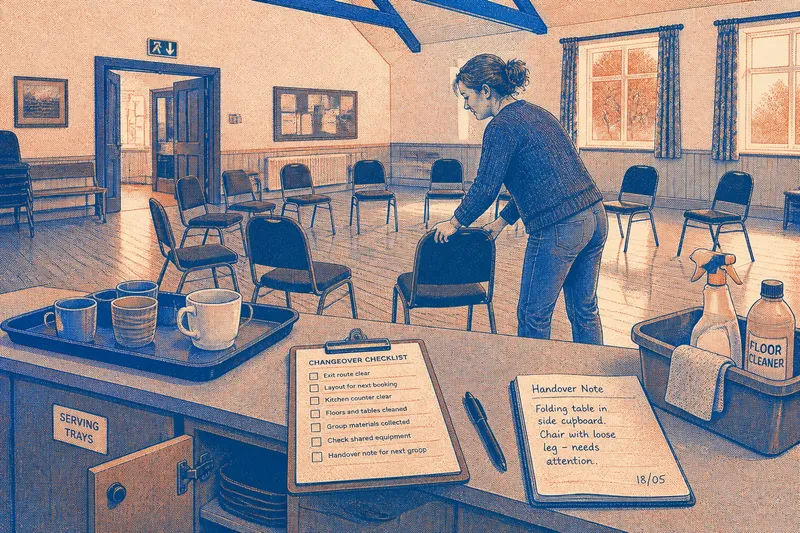
Who is meant to put the village hall back after the meeting, and what does “ready for the next group” actually mean? A village hall changeover is the short reset between bookings: returning shared furniture and equipment, noting anything that needs attention, and leaving the next group a usable room.
The meeting may end with chairs still in a circle, a kettle on the counter, or papers on a table. A few agreed actions can turn that busy moment into a fair handover, without making one volunteer responsible for everything or asking every group to use the same layout.
Agree the reset
Set the routine around what the hall actually contains. Decide which furniture returns to storage, which items stay in place, what surfaces need wiping, and how users report damage or spills. Keep the instructions beside the booking calendar or in another place groups already check.
Give the final check to a role, such as the meeting chair or closing volunteer, rather than relying on a particular person to attend every time. If the assigned person cannot stay, the group can agree who will take over before people leave.
Make the hall’s own safety instructions the boundary for any reset. Do not block exits or move equipment in ways that conflict with building guidance; ask the caretaker or responsible committee when an arrangement is unclear.
A named closing role is easier to hand over than an unspoken expectation.
Use a reset checklist
A short checklist makes the changeover concrete. Each item should describe something users can see and state what to do if it is not as expected.
- Check that the exit route is clear; if chairs, bags, or boxes block it, move them only to an approved place, or contact the hall’s responsible person if no safe place is obvious.
- Check whether tables and chairs match the next booking’s agreed layout; if they do, leave them in place, and if they do not, reset them using the hall diagram or ask the booking contact.
- Check the shared kitchen counter for cups, serving trays, and rubbish; if items belong in a labeled cupboard, return them there, and if their home is unknown, leave a clear note rather than guessing.
- Check the floor and table surfaces for visible spills or craft debris; if present, clean them with the hall’s approved supplies, and if the substance or cleaning method is unclear, report it to the caretaker.
- Check that group-owned materials have been collected; if anything remains, place it in the group’s agreed storage area, or message its named contact if no place was agreed.
- Check for a broken, missing, or malfunctioning shared item; if one is noticed, record what and where it is, then notify the usual hall contact instead of leaving the next group to discover it.
- Check the hall log or handover note for the next booking’s needs; if the room is ready, record any useful detail, and if it is not, contact the next group or hall representative using the agreed channel.
Keep the checklist limited to tasks users can complete with the hall’s available supplies and instructions. If an item requires specialist attention, the checklist should prompt a report, not an improvised repair.
Make the handover useful
A useful note says what the next group needs to know, without judging the people who were there before. “The folding table is in the side cupboard” helps someone act. “The room was left in a mess” does not identify what to do.
Choose one handover route: a paper log near the booking information, a shared message channel, or a contact person. Keep current arrangements and contact details there, and remove old instructions when the hall changes its setup.
Imagine a committee meeting ends with chairs in a circle, a serving tray on the counter, and one chair with a loose leg. The closing volunteer checks the next booking note, returns the tray to its labeled cupboard, follows the hall diagram to reset the chairs, and writes that the chair needs attention before the next use. The next group sees the expected layout and knows to avoid the faulty chair while the hall contact arranges a check.
Write down the location of anything the next group may otherwise have to search for.
Handle disagreements fairly
Groups may reasonably want different arrangements. A discussion group may need chairs facing one another, while a talk may need rows. Compare the practical needs and the booking schedule before deciding whether the room should be reset each time or whether one arrangement can remain for adjacent bookings.
Storage can also cause friction. Keep communal equipment in a known shared location, and agree on a limited, clear place for group-owned supplies. If a cupboard is full, ask the groups that use it to review what belongs there rather than moving someone else’s things without notice.
If two groups cannot agree, refer the issue to the hall’s committee or caretaker under the usual booking arrangements. A decision should clarify what changes, who is responsible, and where the new instruction will be recorded.
When should the routine change?
What if the next booking needs a different layout?
Check the booking note and use the hall’s agreed layout diagram. If the requested arrangement is missing or unclear, contact the booking person rather than leaving furniture in a guesswork position.
What belongs in the handover note?
Include a practical detail that affects the next booking, such as a moved item, a cleaning issue, or equipment needing attention. Leave out blame and personal comments.
Who handles a problem beyond the group’s role?
Report it to the named hall contact, caretaker, or committee using the established channel. Do not attempt repairs or changes to building equipment unless the hall’s instructions authorize them.
How can repeated snags be addressed?
Record the recurring issue and raise it with the person responsible for bookings or hall arrangements. Agree on one change, such as a clearer storage label, then update the written routine so every group receives the same instruction.
Keep the agreement current
Review the reset when bookings change, a group raises the same problem repeatedly, or the hall adopts a different arrangement. Ask whether the checklist describes visible tasks, whether users know where to report concerns, and whether the next group can tell that the room is ready.
A good village hall changeover does not require a perfect room. It requires a reliable way to return shared things, identify anything that needs attention, and pass along the information the next booking needs. Keep that agreement brief, visible, and specific to the hall.