From Seasonal Fair to Local Calendar: Why Communities Mark the Year Together
A seasonal gatherings calendar helps neighbours find and join local events. Learn how to plan welcoming traditions that fit the season and volunteer capacity.
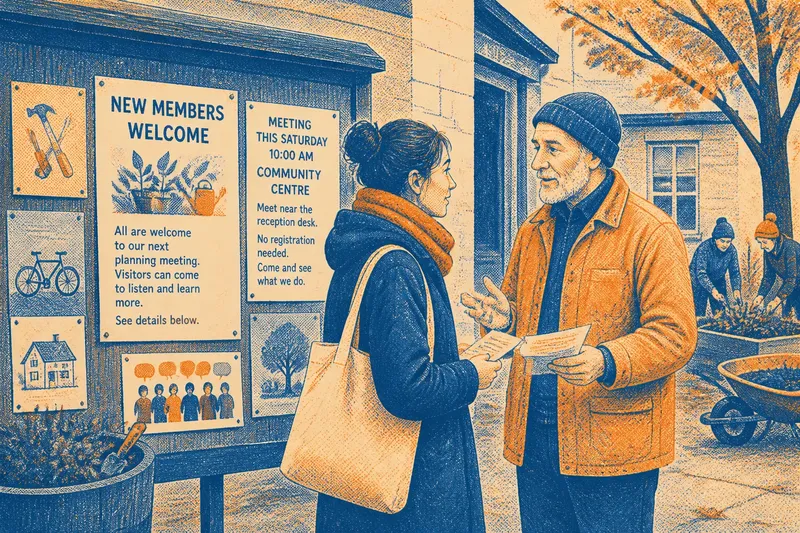
When an autumn fair date goes up at the library, a newcomer may wonder whether it is open to everyone or only familiar faces. A seasonal gatherings calendar helps neighbours find local events and decide how to join. Its value lies not in filling every month, but in making shared occasions visible and manageable.
Shared seasonal rhythms
A seasonal gathering returns at a recognizable point in the year: a spring plant exchange, a summer picnic, a harvest supper, or a winter craft afternoon. It can be practical, social, cultural, or simply an excuse to meet. A recurring occasion gives neighbours a common reference without asking them to share the same beliefs or traditions.
That distinction matters in a community where residents observe different holidays or none at all. A fair can focus on local produce and meeting neighbours rather than implying a shared faith. A lantern walk can be described as an optional evening outdoors, without presenting it as everyone’s custom.
Describe the activity plainly and let people decide whether its meaning and format suit them.
A calendar that fits
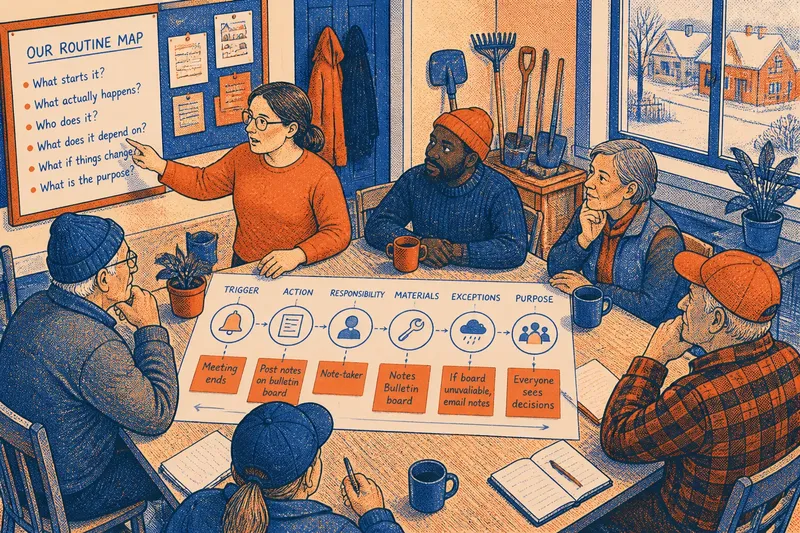
Build the calendar around the year residents actually live through. A paper calendar, shared spreadsheet, or library noticeboard can help a small organizing group plan one season at a time. Before setting dates, check school breaks, recurring community commitments, access needs, and the venue’s availability.
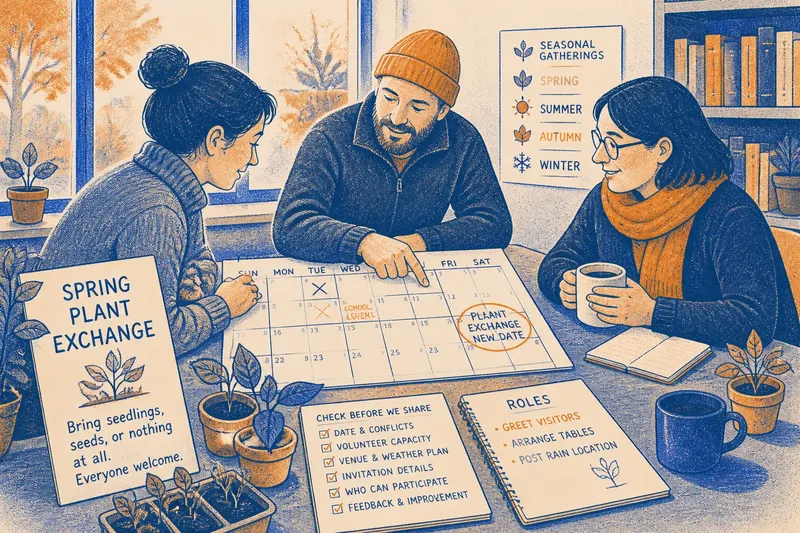
- Check existing commitments: If a proposed date conflicts with a major local event, then move it or choose another activity; otherwise, keep the date and share it clearly.
- Check volunteer capacity: If too few people can handle setup and hosting, then reduce the program or postpone it; otherwise, assign named roles before announcing the event.
- Check the venue and weather plan: If the space or backup plan does not fit the activity, then select a different location or format; otherwise, include the location and weather decision in the invitation.
- Check the invitation details: If the time, cost, access information, or what to bring is unclear, then revise the notice; otherwise, share it through more than one channel.
- Check who can participate: If attendance seems to depend on bringing food, money, or prior connections, then add a no-cost way to join and explain that newcomers are welcome; otherwise, keep the entry instructions direct.
- Check feedback after the event: If visitors report confusion or an avoidable barrier, then change that feature before repeating it; otherwise, retain what worked and decide whether the event still fits local interest.
Say a neighborhood group has a library room available for a spring plant exchange, with three volunteers willing to help, and a nearby school event already scheduled for the same afternoon. The group checks its calendar, moves the exchange to the following Saturday, and assigns one volunteer to greet visitors, one to arrange tables, and one to post the rain location. It then writes that people may bring seedlings, seeds, or nothing at all. The resulting decision is to hold a modest indoor exchange on the new date; the notice gives newcomers a clear reason to come even if they have nothing to trade.
A familiar season matters more than protecting one exact weekend.
Room for return
Recurring events work best when they are recognizable but not rigid. Keep one or two familiar features, such as a shared table or a walk along a public path, and let other parts change. Returning neighbours have something to recognize, while organizers can adapt to different needs and available help.
Make the first visit easy. A visible welcome table, a sign naming the activity, and a plain-language invitation help someone understand what is happening without knowing an organizer. If volunteer help is limited, choose a modest format instead of promising a program that needs more hands.
Belonging and access
Review the wording, location, timing, and cost before repeating an event. Does the invitation assume a particular family structure, faith, language, or ability? Can someone take part without bringing food or contributing money? A small change can make a gathering easier to approach.
Share dates in places residents already use, such as a school bulletin, library counter, neighborhood email list, or local shop window, with permission. Avoid relying on a single social channel. If an event centers a particular cultural or religious tradition, describe it accurately and invite community members to shape its presentation rather than calling it a universal local custom.
For venue rules or event requirements that depend on local policy, check with the venue or relevant local office before publishing details.
Questions about gatherings?
How many seasonal gatherings should a community plan?
Start with the events local volunteers can support without exhausting themselves. One recurring gathering can provide a reliable point in the year; add another only when it has a distinct purpose and enough willing help.
What if weather disrupts an outdoor event?
Choose a backup plan before invitations go out, such as an indoor room or a postponement notice with a clear decision time. If there is no suitable alternative, state where and when people will learn about a cancellation.
How can a new resident find local gatherings?
Post dates in more than one familiar public place and include a contact route for questions. A welcome note that says whether newcomers can simply arrive is more helpful than an insider name for the event.
Should a gathering keep the same format each year?
Keep the features that help people recognize and enjoy it, then reconsider parts that no longer fit. Invite input from attendees and non-attendees so the calendar reflects more than the organizing group’s preferences.
Notes for next season
After each gathering, record its name, the work it required, and one specific change to consider. “Add seating near the music” gives future organizers a clear action; “make it better” does not. Share the next date once it is settled, and leave room for a season without an event if local energy is low.
A seasonal gatherings calendar becomes useful through repetition, clear invitations, and the freedom to adapt. Keep commitments within the group’s capacity, and make the next occasion easy to find for someone who has not yet found their way in.